Personalize your takeaways & insights with AI




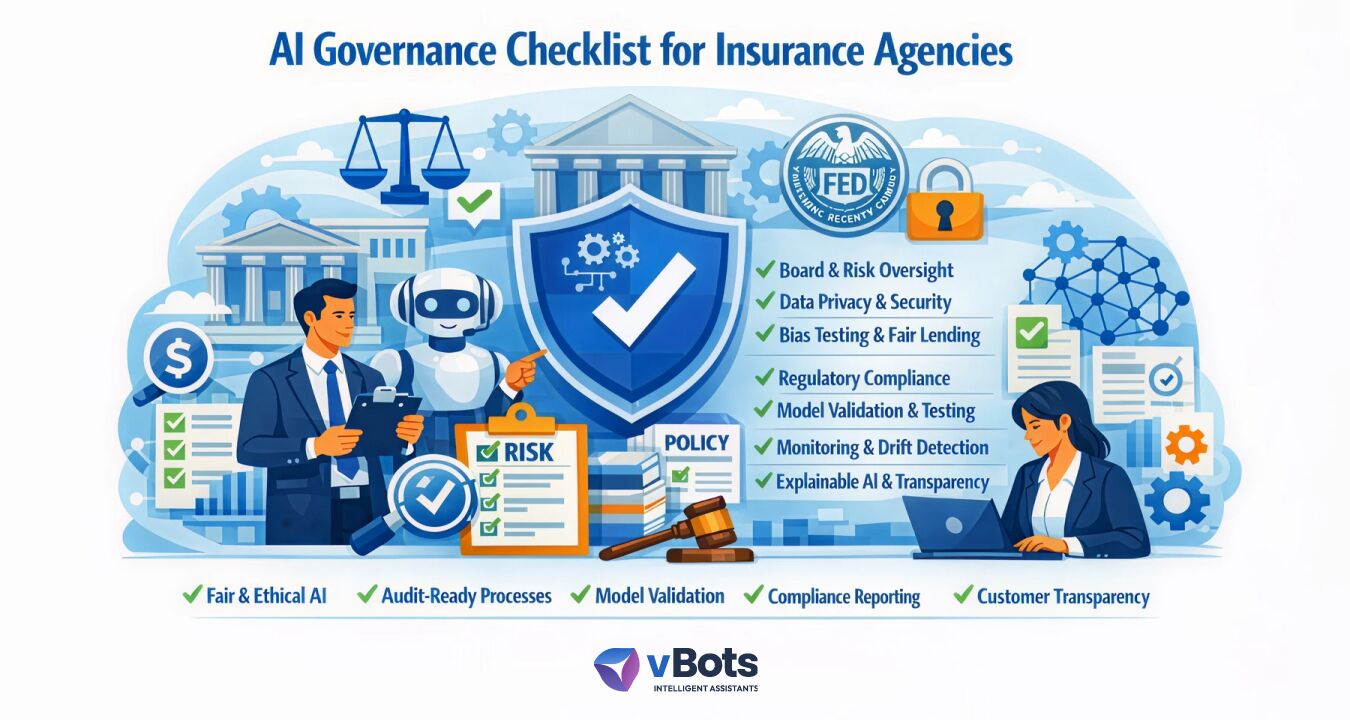
Artificial intelligence is transforming how insurance agencies operate, from underwriting and claims processing to customer engagement and fraud detection. But with innovation comes responsibility. Establishing a robust AI governance framework ensures that automation aligns with ethical, regulatory, and operational standards. This checklist helps agencies implement governance that builds trust, transparency, and compliance.
1. Governance Structure and Accountability
- Define ownership: Assign clear roles for AI oversight, typically a compliance officer or governance committee.
- Establish policies: Document AI usage guidelines covering data, ethics, and risk management.
- Board involvement: Ensure executive leadership reviews and approves AI governance frameworks.
- Vendor accountability: Require third-party AI providers to adhere to your governance standards.
2. Data Management and Security
- Data quality assurance: Validate data sources for accuracy, completeness, and relevance.
- Privacy compliance: Align with HIPAA, GDPR, and state insurance privacy laws.
- Access control: Implement role-based permissions and encryption for sensitive data.
- Retention and deletion: Define timelines for data storage and disposal.
3. Fairness and Bias Mitigation
- Bias testing: Regularly audit AI models for discriminatory outcomes.
- Representative data: Use diverse datasets to minimize bias.
- Human review: Include human-in-the-loop processes for critical decisions.
- Transparency: Document how models make decisions and share summaries with regulators when required.
4. Compliance and Regulatory Alignment
- NAIC FACTS principles: Follow Fairness, Accountability, Compliance, Transparency, and Security.
- Model Bulletin adherence: Maintain an AI Systems (AIS) Program with documented governance.
- Actuarial Standards of Practice (ASOPs): Ensure AI-driven pricing and underwriting comply with actuarial fairness.
- Audit readiness: Keep detailed logs and documentation for regulatory reviews.
5. Model Management and Monitoring
- Model registry: Maintain a centralized inventory of all AI models in use.
- Version control: Track updates and retraining cycles.
- Performance monitoring: Continuously evaluate accuracy, drift, and reliability.
- Incident response: Define escalation procedures for model failures or compliance breaches.
6. Explainability and Documentation
- Decision traceability: Ensure every automated decision can be explained and justified.
- Consumer communication: Provide clear explanations when AI influences outcomes.
- Regulatory transparency: Prepare documentation for audits and consumer inquiries.
7. Ethical and Operational Oversight
- Ethical review board: Evaluate AI use cases for fairness and societal impact.
- Training and awareness: Educate staff on responsible AI practices.
- Continuous improvement: Update governance frameworks as technology and regulations evolve.
8. Automation Governance Integration
- Workflow validation: Test automated processes for compliance and accuracy.
- Human override: Allow manual intervention in high-risk or ambiguous cases.
- Audit trails: Record all automated actions for accountability.
- Performance benchmarking: Compare automation outcomes against human decisions.
9. Reporting and Communication
- Governance dashboard: Track compliance metrics and AI performance indicators.
- Stakeholder reporting: Share governance updates with regulators, partners, and customers.
- Incident disclosure: Communicate breaches or ethical concerns transparently.
10. Continuous Governance Evolution
- Periodic reviews: Conduct annual governance audits.
- Regulatory updates: Adapt frameworks to new laws and standards.
- Technology alignment: Integrate emerging AI ethics and compliance tools.
Key Takeaway
AI governance is not a one-time project. It’s a continuous commitment to responsible innovation. Insurance agencies that adopt structured governance will gain regulatory confidence, customer trust, and operational resilience.
vBots supports agencies in building compliant, transparent, and efficient AI systems that meet the highest standards of governance and automation.
Share this article