Personalize your takeaways & insights with AI




Executive Summary
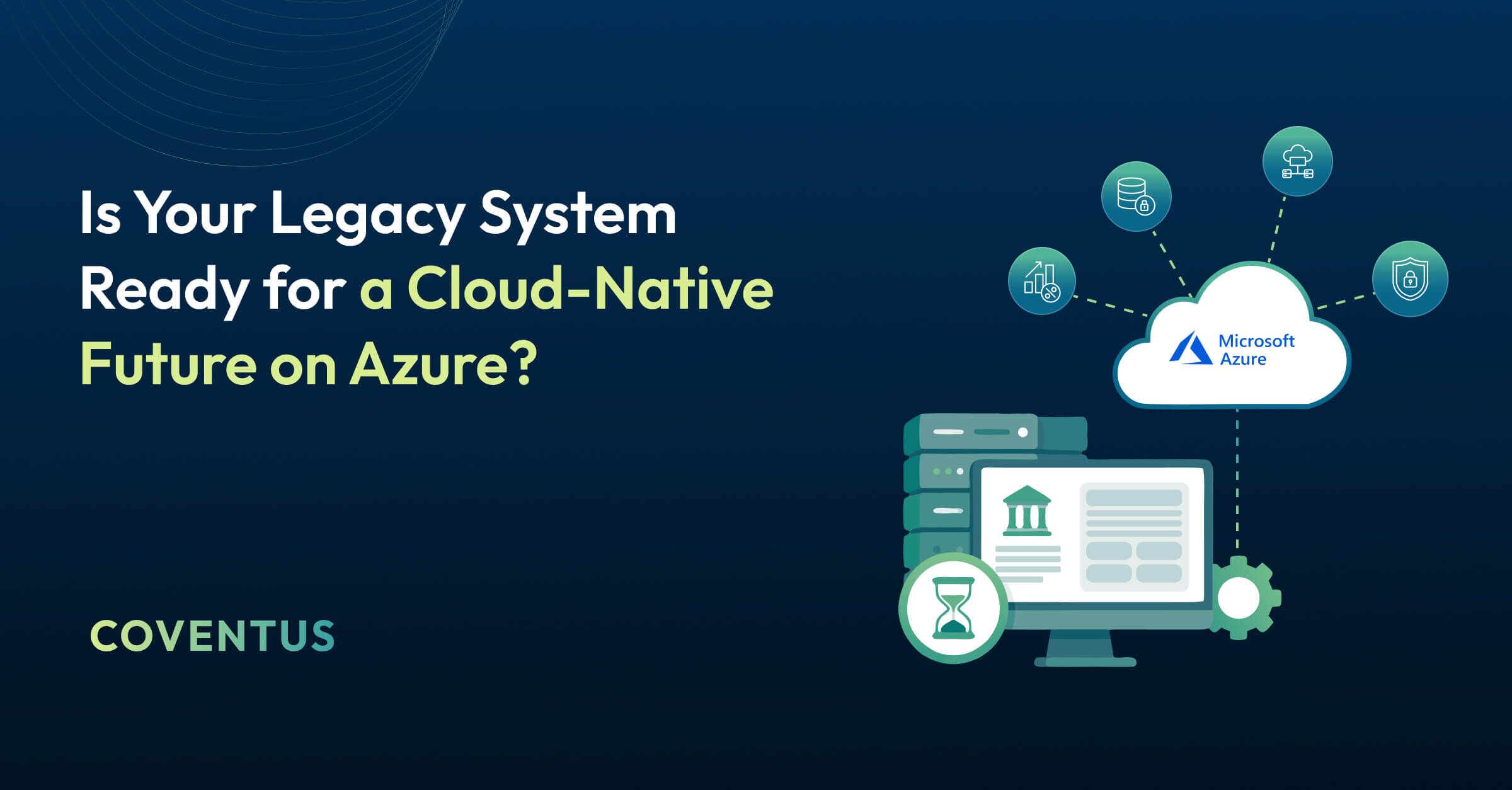
A mid-sized B2B operational platform supporting complex enterprise workflows was limited by a 10+ year-old monolithic system. Growth, integration requests and feature velocity were exceeding the architecture’s ability to accommodate these requirements.
To provide the company with the flexibility it needed to grow, rather than perform a simple lift-and-shift migration, the company undertook a cloud modernization process on Microsoft Azure — leveraging a phased approach that combined re-hosting, re-platforming, and re-factoring to create a scalable, resilient, and cost-effective cloud-native platform.
Results
- Approximately 60% reduction in deployment cycle time.
- Infrastructure costs optimized by 25–35% through right-sizing and scheduling.
- Improved system resiliency, near elimination of deployment related outage events.
- Implementation of a modern DevOps-based operating model to facilitate ongoing innovation.
Research by Gartner and McKinsey indicate that cloud-native modernization provides organizations with greater agility, decreases technical debt, and enables faster innovation — all of which are reflected in this engagement.
Client Profile
Industry: B2B Services
Organization Type: Mid-Sized Operational Platform
Environment: Hybrid On-Premise + Cloud
Platform: 10+ year-old monolithic system managing core business workflows
The platform supports day-to-day critical mission-based workflows utilized by both internal teams and external business partners. Any downtime or instability during the release of new features will negatively impact revenue operations and customer satisfaction.
Business Challenges
Although the legacy monolithic application has served the business well for over a decade, as the business grew, so did the pressure on the application’s architecture.
Constraints
- Limitations to scalability at peak usage cycles.
- Module coupling was too tight to allow for timely feature development.
- Manual deployments resulted in release cycles measured in weeks.
- Point-to-point integrations between systems created fragile interfaces.
- Increasingly aged infrastructure added to operational risk.
- Increasingly rising infrastructure and support costs.
Users experienced longer feature rollout times and sometimes unstable conditions during deployments. The risks associated with development teams introducing even minor changes continued to increase as a result of the deep interdependencies within the system.
The client did not seek simply to host their applications on the cloud; instead they sought transformation: increased agility, higher reliability, lower costs, and a modern software foundation.
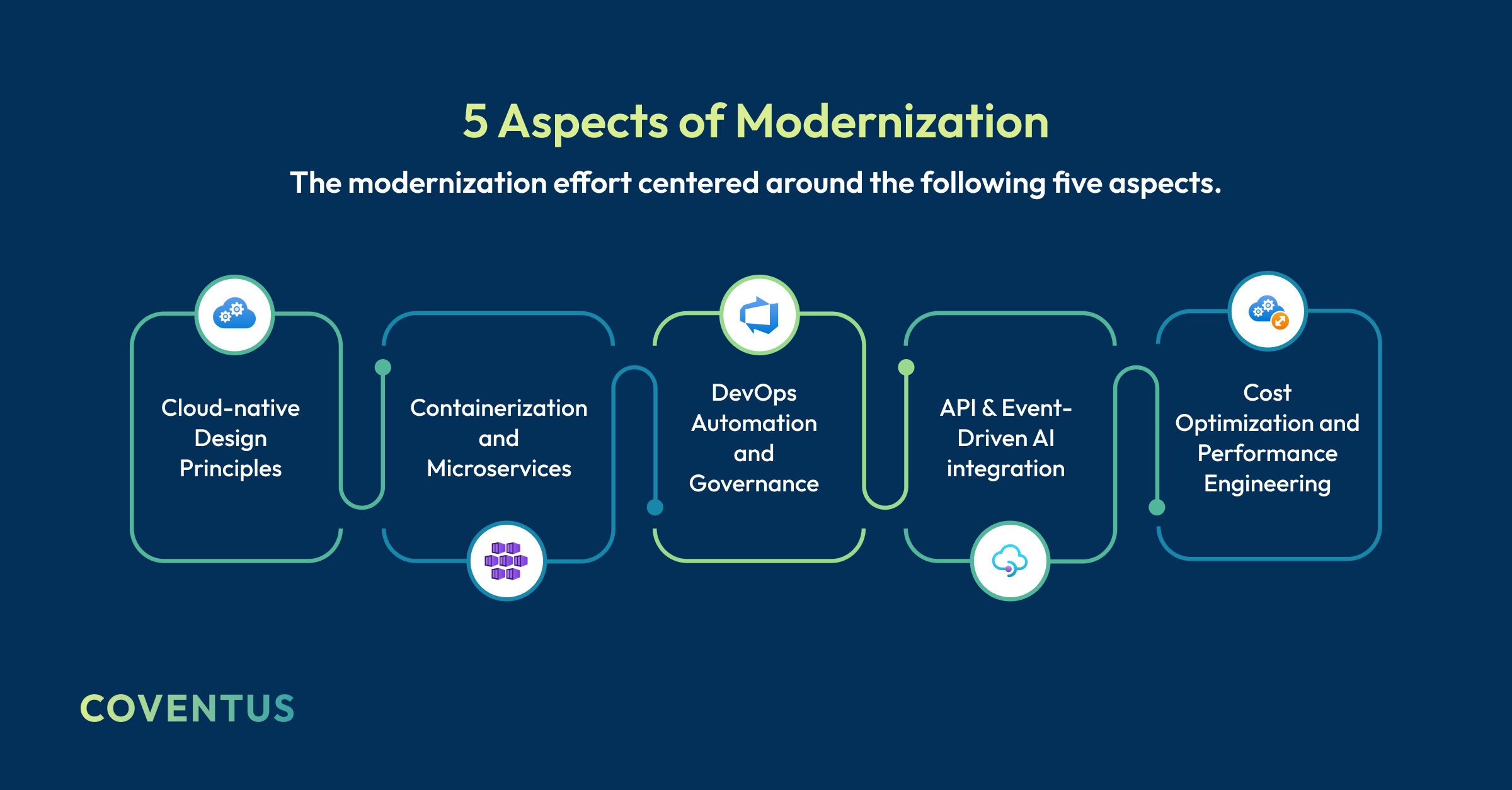
To minimize the risks associated with large-scale migrations and ensure the company’s continued operation, the company undertook the modernization efforts in phases.
Phased Implementation
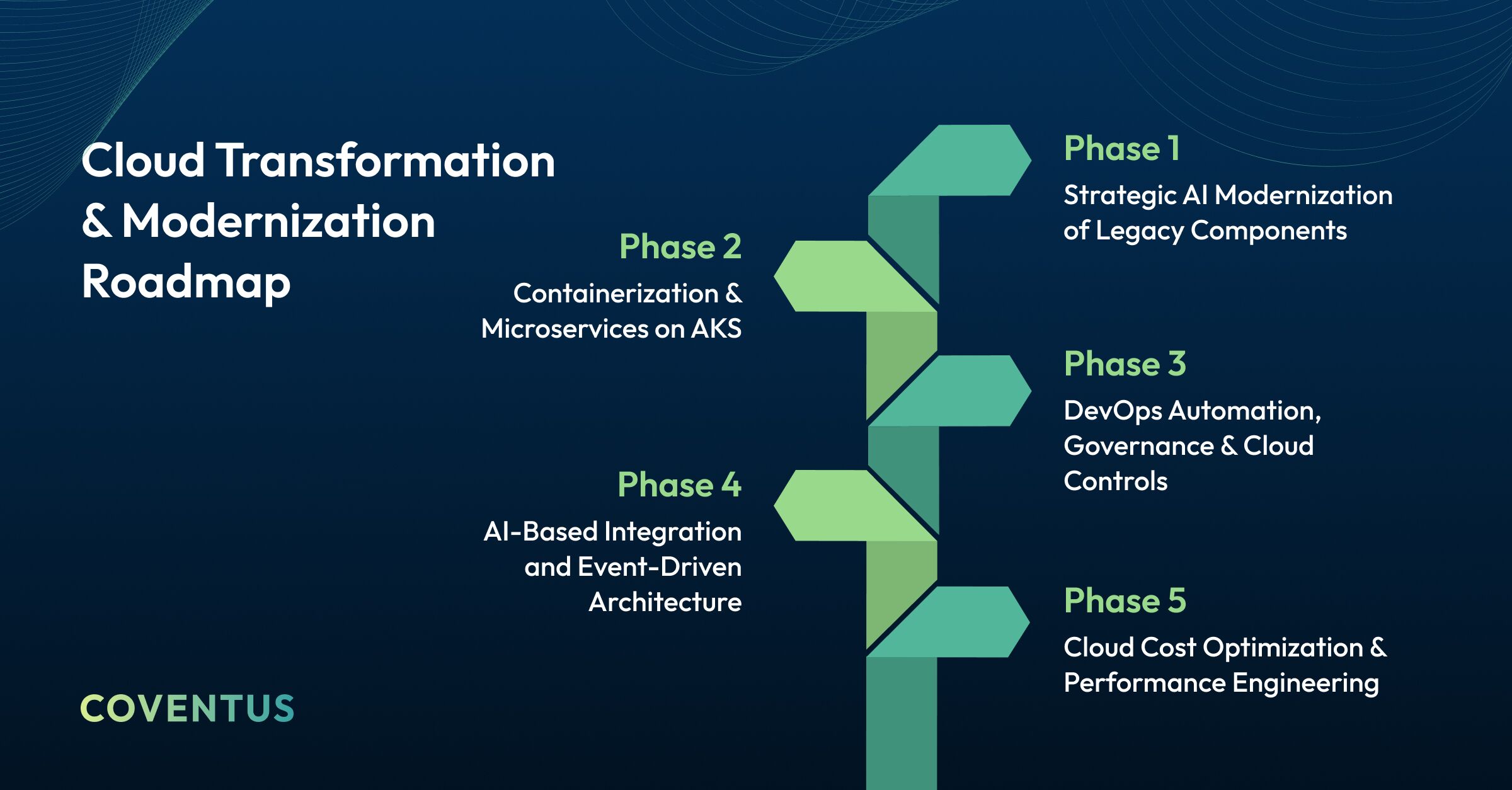
Phase 1: AI-Based Modernization of Legacy Components
Following an in-depth architectural assessment, it was determined which components would be best suited for modernization and future AI-driven capabilities through:
- Rehosting – moving low-risk workloads with minimal modification.
- Re-platforming – transitioning ancillary services to managed Azure services.
- Refactoring – redesigning core operational workflows for scalability and AI readiness.
- Selective rebuilding – rewriting high-impact modules to eliminate technical debt and support AI-based automation.
Evolution of the Architecture
Core transactional services were re-factored into loosely coupled components. Reporting and batch processing services were re-platformed using managed Azure services. Some of the Azure services employed include:
- Azure App Service
- Azure Functions
- Azure Kubernetes Service (AKS)
- Azure SQL & Managed Databases
Outcome
- Modernized AI-based application landscape with improved agility.
- Reduced technical debt and operational complexity.
- Enhanced scalability and cloud-native capabilities.
- Established a foundation for AI-powered automation, analytics, and future innovation.
Positioning: Modernization became a strategic investment — not merely migrating infrastructure — positioning the organization for long-term digital agility.
Phase 2: Containerization & Microservices on AKS
The monolithic application was decomposed into domain-aligned microservices. Each workload was containerized and deployed to Azure Kubernetes Service (AKS).
Benefits of Microservices
- Enabled independent service deployments to enable parallel team deliveries.
- Allowed for updates to be made to unrelated modules without impacting other module(s).
- Allowed horizontal scaling to rapidly respond to peak demand.
- Allowed fault isolation to reduce systemic outages.
Outcome
- Significantly increased release frequency.
- Released at least 60% faster.
- Downtime of the application during releases was nearly eliminated.
Positioning: The architectural shift enabled the organization to scale product capabilities as quickly as market demands require.
Phase 3: DevOps Automation, Governance & Cloud Controls
A DevOps-first operating model was established to modernize delivery practices.
Introduced Capabilities
- Established CI/CD pipelines for automated builds and deployments.
- Established IaC for repeatable environments.
- Established automated testing gates.
- Established centralized monitoring and logging.
- Established Role-Based Access Control (RBAC).
- Established policy enforcement to prevent environment drift.
- Established approval workflow for production releases.
- Established security baselines and compliance guardrails.
Enhancements to Governance
Using policy-as-code, environment drift was minimized. Using RBAC, secure access segmentation was provided to developers, testers and production engineers across multiple environments (dev, test, prod).
Outcome
- Faster release cycles.
- Less frequent deployment related problems.
- Consistent environments.
- Reduced operational burden.
Positioning: Speed became a key differentiator for the organization while enhancing the security and compliance posture.
Phase 4: AI-Enabled Integration & Event-Driven Architecture
Legacy one-to-one integrations were replaced with scalable, AI-ready integration patterns utilizing:
- Azure API Management
- Event-driven architecture
- Asynchronous messaging
- AI-driven automation capabilities
Outcome
- System communication decoupling.
- Reliable data flow between systems.
- Improved Scalability & Reduced Integration Fragility
- Enhanced readiness for AI-powered decisioning and automation
Industry best practices acknowledge the importance of AI-enabled, API-led, and event-driven architectures in supporting digital ecosystems that scale and accelerate intelligent automation.
Phase 5: Cloud Cost Optimization & Performance Engineering
A deliberate cost and performance engineering phase was integrated into the modernization process.
- Right sizing of the infrastructure.
- Configuration of auto-scaling.
- Scheduling of non-production workloads to eliminate compute waste.
- Monitoring through Azure Monitor and Application Insights
- Continual performance tuning
Outcome
- Monthly cloud spend reduced by 25 – 35%.
- Faster application response time.
- Operating costs are predictable and based on usage patterns.
Positioning: Modernization would not be complete until the platform demonstrated measurable improvements in cost efficiency and performance.
Outcomes and Measured Impact
Business Results
The engagement provided the following results:
- Platform Architecture: Modern cloud-native
- Deployment Cycle Time: 60% Faster
- Scalability and Resilience: Improved
- Operational Overhead: Lower
- Lower Infrastructure Costs
- Foundation For Ongoing Innovation: Stronger
From Legacy Systems To Continuous Innovation
The client transitioned from maintaining aging legacy systems to continually improving their digital capabilities.
Business Impacts
The client now has an adaptable, reliable and scalable cloud platform that will enable:
- Growth of Business
- Enablement of Faster Innovation Cycles
- Reduce Technical Debt
- Improve Operational Reliability
- Cloud Modernization Transformed Both Technology and Operating Model.
Governance, Risk & Compliance
Established Role-Based Access Control (RBAC).
Using policy-as-code, environment drift was minimized. Using RBAC, secure access segmentation was provided to developers, testers and production engineers across multiple environments (dev, test, prod).
Lessons Learned
Cloud Modernization is much more than just migrating to the cloud. It involves:
- Re-designing the architectural structure of an application.
- Transforming the operational model.
- Intelligent integration.
- Automation of DevOps.
- Discipline in regards to cost and performance.
The client transformed a 10-year old legacy system to a digital platform ready for the future that can support sustainable growth and innovation using cloud native services, micro-services, automation, and governance.
Share this article